


Cash Flow Reports for Clearer Financial Analysis

BusinessBook Plus cash flow reports help you understand where money came from, where it was used, and how your cash position changed across a selected period. Review cash inflows, outflows, and business activities in one structured financial view.

Cash Flow Report Snapshot

OPEN Opening Cash Position

Start with the cash position available at the beginning of the reporting period.

Start

MOVE Net Cash Movement

Understand the combined effect of cash received and cash paid during the period.

Analyze

CLOSE Closing Cash Position

See how business activity changed the cash position by the end of the selected period.

Review
Cash Flow by Activity Type

Understand Operating, Investing, and Financing Cash Movement

A structured cash flow report groups financial movement by business activity, helping you understand whether cash is being generated through regular operations, invested in long-term assets, or influenced by loans and capital decisions.

Start Today
Operating activities in a business cash flow report
Operating

Operating Activities

Cash generated or used in everyday business operations.

  • Customer receipts from sales
  • Supplier and vendor payments
  • Salaries, rent, utilities, and taxes
  • Other routine business cash movements

Helps show whether normal business operations are generating or using cash.

Investing activities in a business cash flow report
Investing

Investing Activities

Cash used for or received from long-term assets and investments.

  • Machinery and equipment purchases
  • Vehicles and property
  • Purchase or sale of fixed assets
  • Long-term investment movements

Shows how cash is being deployed toward assets, expansion, and future capacity.

Financing activities in a business cash flow report
Financing

Financing Activities

Cash related to loans, capital, repayments, and withdrawals.

  • Loan proceeds
  • Loan repayments
  • Owner capital contributions
  • Withdrawals and other funding movements

Helps explain how borrowing and capital decisions affect the overall cash position.

What the Report Helps You See

Turn Cash Transactions into Financial Insight

Review the major components of cash movement together so you can understand not just the closing balance, but what changed it.

Explore Cash Flow Management
01

Cash Inflow

Review money received through customer payments, sales collections, advances, income, loans, capital, and other sources.

CollectionsIncomeFundingCash received
02

Cash Outflow

Review money paid for suppliers, purchases, salaries, rent, utilities, taxes, loans, assets, and other business commitments.

PaymentsExpensesAssetsCash paid
03

Net Cash Movement

See the difference between total cash received and total cash paid during the reporting period.

Positive movementNegative movementPeriod changeCash trend
04

Customer Collections

Understand how customer payments contribute to operating cash and how sales convert into actual money received.

ReceiptsReceivablesCollectionsOperating cash
05

Payments and Expenses

See how vendor payments, operating expenses, and other outgoing transactions affect total cash movement.

Vendor paymentsOperating costsPurchasesCash usage
06

Period-Based Analysis

Review cash movement across selected periods to understand changing collection, payment, expense, investment, and funding patterns.
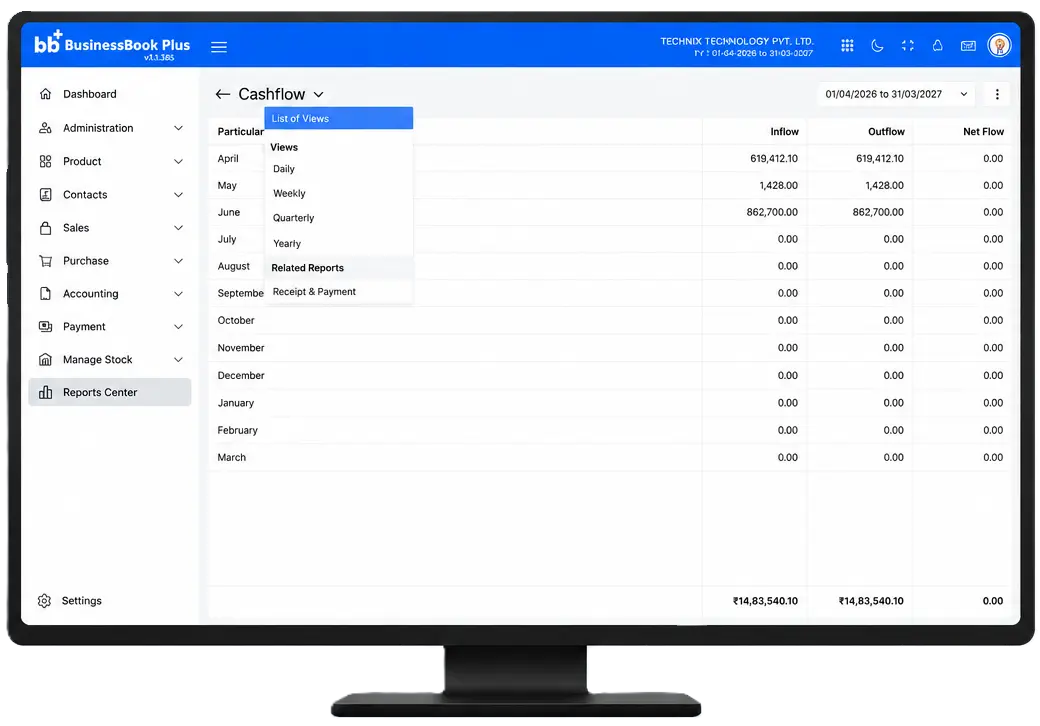
DailyWeeklyMonthlyCustom period
BusinessBook Plus cash flow report view
Financial reporting

See Where Cash Came From.
Understand Where It Went.

Why Cash Flow Reporting Matters

Financial Performance Is More Than Profit

A business can report healthy revenue or profit and still experience cash pressure. Cash flow reporting helps explain when money was actually received, where it was used, and which activities changed liquidity during the period.

View Your Cash Flow
Understand Cash Sources
See whether cash came from operations, asset movements, loans, capital, or other sources.
Understand Cash Uses
See how supplier payments, expenses, assets, repayments, and other commitments used cash.
Explain Cash Changes
Understand why the closing cash position increased or decreased during a selected period.
Cash flow report analysis in BusinessBook Plus
Separate Profit from Cash
Recognize that accounting profit and available cash can move differently.
Review Business Trends
Use period-based cash movement to identify patterns in collections, payments, and spending.
Support Better Planning
Use clearer cash information alongside sales, purchases, receivables, payables, and expenses.
Questions Your Report Can Answer

Understand What Changed Your Cash Position

A cash flow report helps business owners, accountants, and finance teams move beyond a single balance and understand the financial activities behind cash movement.

Manage Cash Flow
1
How much cash entered the business during this period?
2
How much cash left the business?
3
What was the net change in cash?
4
How much cash came from normal business operations?
5
How much cash was used for assets or investments?
6
How did loans, repayments, or capital affect cash?
7
Are collections and operating cash movement improving?
8
Which activities are consuming the most cash?
Cash Flow Report FAQs

Common Questions About Cash Flow Reports

Understand cash inflow and outflow, activity classifications, period-based analysis, and the difference between profit, reporting, and cash flow management.

A cash flow report shows how money entered and left a business during a selected period. It helps explain the sources and uses of cash and how the overall cash position changed.

Cash flow is commonly grouped into operating activities, investing activities, and financing activities. These categories help explain cash generated or used through everyday operations, long-term assets and investments, and funding or capital decisions.

Cash inflow is money received by the business, while cash outflow is money paid by the business. Reviewing both together helps explain the net change in cash.

No. Profit measures earnings based on revenue and expenses, while cash flow reflects actual money moving into and out of the business. A profitable business can still experience cash pressure when collections are delayed or large payments become due.

Yes. BusinessBook Plus can help you review cash movement across selected periods so you can understand how inflows, outflows, collections, payments, and expenses change over time.

Customer payments contribute to cash inflow and help show how recorded sales are converting into actual money received by the business.

Yes. Payments related to purchases, suppliers, operating expenses, assets, loans, and other commitments can contribute to cash outflow.

Cash flow reporting helps you analyze how money moved through the business. Cash flow management uses that visibility to plan collections, payments, expenses, working capital, and liquidity.

Understand Your Cash Position with Better Reporting

Use BusinessBook Plus cash flow reports to see where money came from, where it went, and how operating, investing, and financing activities affected your business over a selected period.

BusinessBook Plus cash flow reports