

Cash Flow Management Software for Better Financial Control

BusinessBook Plus helps you track cash coming in, monitor money going out, manage customer collections, plan vendor payments, control expenses, and understand your available cash position from one connected platform.

Cash Flow Control Dashboard

IN Cash Inflow

Customer payments, sales collections, advances, and other business income.

Track

OUT Cash Outflow

Vendor payments, purchases, salaries, rent, utilities, loans, and expenses.

Control

NET Cash Position

See whether cash movement is strengthening or putting liquidity under pressure.

Review
Manage the Cash Cycle

Stay Ahead of Collections, Payments, and Working Capital

Cash flow management is more than reviewing a report. BusinessBook Plus helps you act on the activities that directly affect liquidity, from collecting customer dues to planning supplier payments and controlling money tied up in everyday operations.

Start Today
Customer collections and receivables management
Collect

Customer Collections

Turn outstanding receivables into available cash faster.

  • Track customer payments
  • Review pending receivables
  • Identify overdue balances
  • Prioritize payment follow-ups

Better collection visibility helps improve working capital and day-to-day liquidity.

Vendor payments and business cash commitments
Plan

Vendor Payments

Understand upcoming obligations before they create cash pressure.

  • Monitor supplier payments
  • Review vendor dues
  • Plan payment timing
  • Balance commitments with available cash

Plan outgoing cash with better visibility into what is due and what the business can support.

Working capital and business liquidity visibility
Control

Working Capital

See where cash is available and where it may be getting blocked.

  • Monitor credit sales
  • Review inventory impact
  • Track recurring expenses
  • Understand liquidity pressure

Use connected business data to keep growth from creating avoidable cash strain.

What You Can Manage

Know What Is Affecting Your Cash Position

Track the financial activities that directly influence available cash, working capital, and everyday business commitments.

Explore Cash Flow Reports
01

Cash Inflow

Track money coming into your business from customer payments, sales collections, advances, refunds, and other income sources.

Customer paymentsCollectionsBusiness incomeAvailable cash
02

Cash Outflow

Monitor vendor payments, purchases, salaries, rent, utilities, taxes, loans, and other business costs.

Expense controlVendor planningPurchase planningCash commitments
03

Net Cash Position

See the difference between cash coming in and cash going out over a selected period.

Liquidity reviewWorking capitalOwner decisionsPeriod review
04

Customer Collections

Review collected amounts and pending receivables so you can identify overdue balances and prioritize follow-ups.

Overdue paymentsReceivable controlFollow-upsCash availability
05

Vendor Payments

Track supplier payments and outstanding vendor obligations so you can plan outgoing cash with greater confidence.

Supplier planningVendor duesPayment timingCash commitments
06

Expense Movement

Understand how recurring expenses, one-time costs, and changing spending patterns affect available cash.

Cost controlExpense planningSpending reviewCash pressure
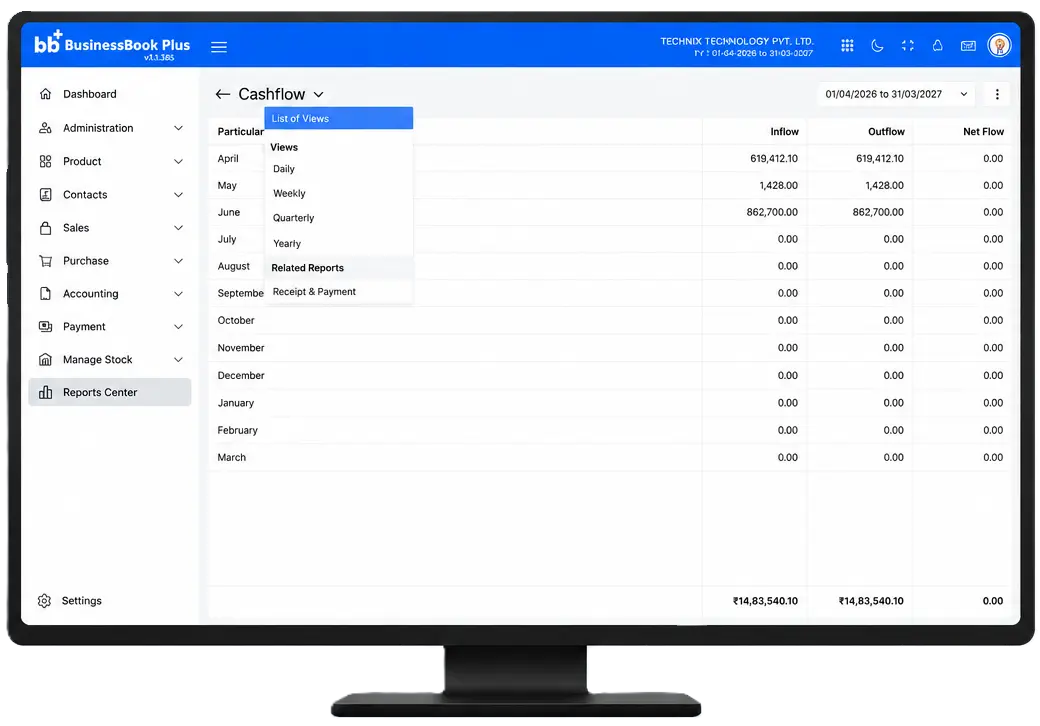
BusinessBook Plus cash flow management dashboard
Cash visibility

See What Comes In.
Know What Goes Out.
Why Cash Flow Management Matters

A Profitable Business Can Still Run Short of Cash

Profit does not always mean cash is available. Delayed collections, excess inventory, rising expenses, and upcoming obligations can put pressure on liquidity even when sales are healthy.

Start Managing Cash Flow
Delayed Vendor Payments
Cash gaps can make it difficult to pay suppliers on time.
Slow Customer Collections
Outstanding receivables can weaken working capital and reduce available cash.
Unexpected Cash Shortages
Limited visibility can create last-minute financial pressure.
Business cash flow visibility in BusinessBook Plus
Money Blocked in Inventory
Excess stock can tie up cash that could support payments or growth.
Poor Payment Planning
Businesses can commit to purchases or expenses without understanding future cash requirements.
Rising Expense Pressure
Growing recurring costs can gradually reduce liquidity and financial flexibility.
Practical Business Decisions

Know Your Cash Position Before Making Business Moves

BusinessBook Plus gives owners, accountants, and finance teams practical visibility into cash movement so they can make better decisions about collections, payments, purchases, expenses, and working capital.

View Cash Flow Reports
1
How much cash came into the business this month?
2
How much cash went out?
3
Are customer collections keeping pace with expenses?
4
Which customers are delaying payments?
5
Which vendor obligations are coming up?
6
Can upcoming payments be made comfortably?
7
Is too much money tied up in inventory or credit sales?
8
Is the overall cash position improving or weakening?
Cash Flow Management FAQs

Common Questions About Managing Business Cash Flow

Learn how BusinessBook Plus helps you manage collections, payments, expenses, receivables, payables, inventory impact, and liquidity.

Cash flow management software helps businesses monitor money coming in and going out while tracking collections, payments, expenses, receivables, payables, and available cash.

BusinessBook Plus connects sales, purchases, customer collections, vendor payments, expenses, receivables, payables, and accounting records to provide a clearer view of cash movement and liquidity.

Yes. BusinessBook Plus helps you monitor customer payments and pending receivables so you can identify overdue balances and plan collection follow-ups.

Yes. BusinessBook Plus helps you monitor supplier payments and outstanding vendor obligations so you can plan cash outflow more effectively.

Yes. Inventory purchases use cash, and excess stock can tie up working capital that could otherwise support supplier payments, expenses, or growth.

Yes. You can review cash movement across selected periods to understand how collections, payments, and expenses are affecting your cash position over time.

No. Profit measures earnings based on revenue and expenses, while cash flow reflects actual money moving into and out of the business. A profitable business can still face cash pressure when collections are delayed or too much cash is tied up in operations.

Cash flow reporting helps you analyze how money moved through the business. Cash flow management uses that visibility to improve collections, plan payments, control expenses, and manage working capital and liquidity.

Take Control of Cash Flow Before It Becomes a Problem

Use BusinessBook Plus to manage cash inflows, control outflows, plan payments, follow up on collections, and make better financial decisions with clearer visibility into your business cash position.

BusinessBook Plus cash flow management software