Standard Structures
Define common accounting, master data, and transaction foundations.
Standardize accounting, inventory, access, reporting, and operating processes with an implementation approach aligned to your organization's requirements.
Standardize accounting, billing, inventory, and reporting workflows.
Define who can view, create, edit, review, or approve financial and operational activities.
Support multi-business, warehouse, and branch operations.
Provide structured reporting, reviewable records, and stronger oversight.
Complex organizations need consistency as entities, locations, users, products, and transaction volumes increase.
Define common accounting, master data, and transaction foundations.
Align system access with business roles and responsibilities.
Bring accounting, inventory, payments, and reporting together.
Plan discovery, migration, validation, training, and deployment.
Enterprise needs appear when separate files and inconsistent local processes no longer provide sufficient control.
Entities, branches, stores, warehouses, or teams need consistent structures.
More employees need appropriate access to accounting and operations.
Different locations record similar transactions in different ways.
Leadership waits for manually consolidated business information.
Accounting data exchanges information with connected business systems.
Stronger review, ownership, and accountability are required.
Create consistent financial structures, business records, and reporting processes so teams work from the same accounting foundation.
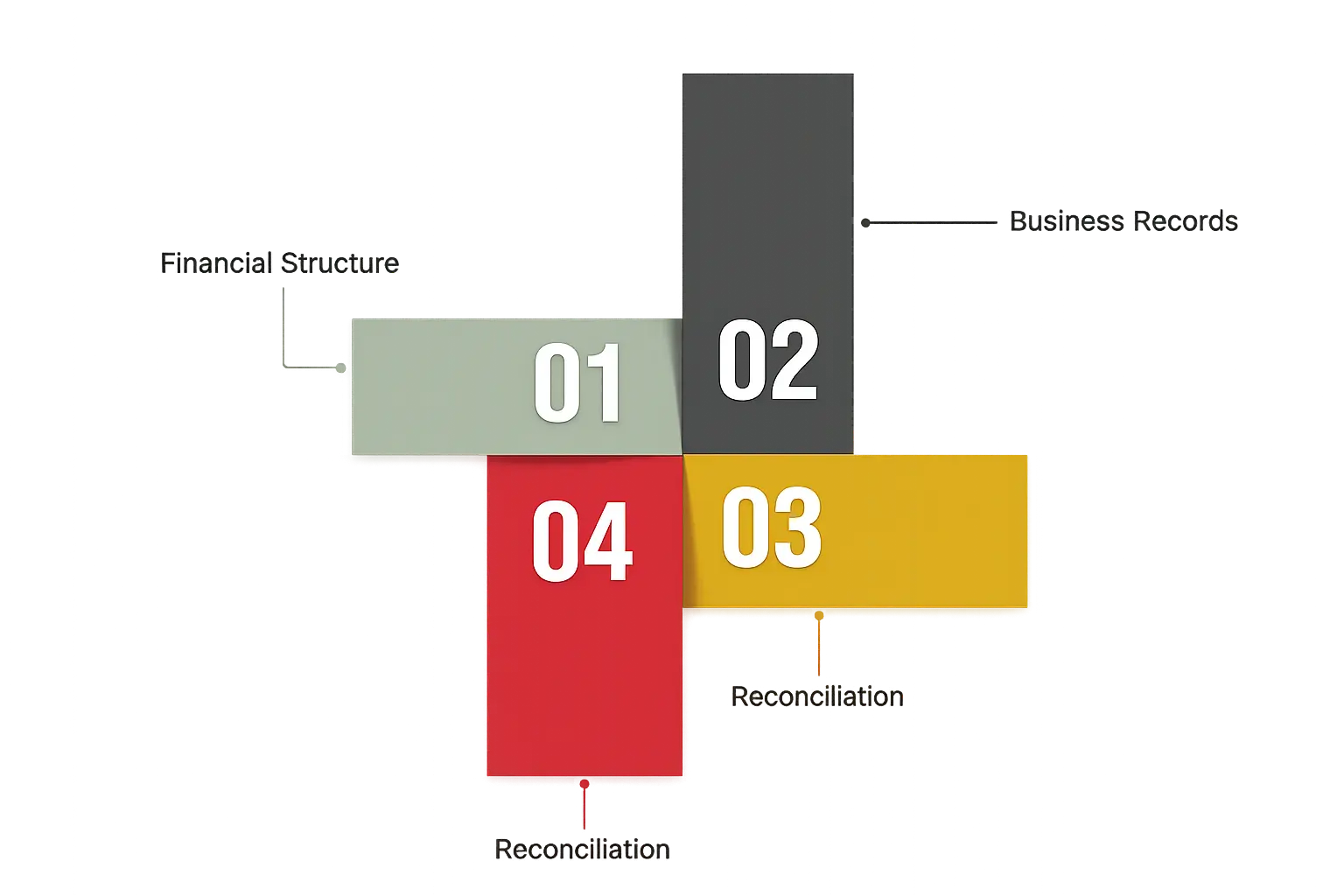
Standardize financial and operational processes across your business with connected transaction workflows.

Define how invoices, taxes, payments, and adjustments are recorded.
Standardize suppliers, purchases, bills, received items, and payments.
Create consistent methods for money received and money paid.
Organize categories, supporting records, and account treatment.
Align items, locations, stock movement, and valuation.
Establish repeatable verification, reconciliation, and reporting steps.
Give each user the access required for their responsibilities without exposing unnecessary functions.

Manage configuration, structures, users, and financial review.
Support billing, purchasing, warehouse, branch, and store activities.
Review relevant operational and financial information.
Provide appropriate review access to accountants or advisers.
Review connected financial and operational information to support better planning, monitoring, and business decisions.
Review profit and loss, balance sheet, trial balance, cash flow, and ledgers.
Understand outstanding customer and supplier positions.
Review activity across products, suppliers, customers, and periods.
Monitor quantities, movement, value, and items needing attention.

Follow a structured implementation approach to prepare data, configure the system, validate processes, and support a successful enterprise rollout.
Document entities, users, business processes, transaction volumes, integrations, and reporting requirements.
Define accounting structures, user roles, inventory setup, approvals, and data ownership.
Clean customers, suppliers, items, chart of accounts, stock records, and opening balances.
Configure approved structures, permissions, workflows, business rules, and operational capabilities.
Import business data, reconcile balances, and verify financial and operational reports.
Test realistic business scenarios and confirm operational readiness before deployment.
Train users by responsibility and transition day-to-day operations to the new system.
Review adoption, data quality, open issues, process compliance, and ongoing improvements.
It helps larger or more complex organizations standardize processes, manage access, connect records, support reporting, and maintain control.
Enterprise software adds governance, standardization, integration planning, implementation control, and management oversight.
BusinessBook Plus is positioned as accounting and inventory software. Full ERP requirements should be validated against the available scope.
Multi-business capabilities are available under applicable plans. Complex entity and consolidation needs should be confirmed.
Integration options depend on APIs, workflows, and the external systems involved.
Begin with discovery covering organization structure, users, data, reporting, integration, security, migration, and support.
Define the operating model, controls, users, data, reports, integrations, and implementation support your organization needs.