Accounting Software for
Manufacturers

Manage raw materials, purchases, production-related costs, finished goods, sales, expenses, GST, receivables, payables, and financial reports from one connected platform built for manufacturing businesses.

Manufacturing Financial Overview

Production & Finance at a Glance

Sample View
Material Purchases ₹4.80L Current month
Finished Stock ₹7.20L Illustrative value
Receivables ₹2.40L Customer dues
Operating Expenses ₹1.60L Current period
Raw MaterialsTracked
Production CostsRecorded
Finished GoodsVisible
Customer DuesCurrent
MATERIAL TO FINISHED GOODS

See How Materials Move Through the Manufacturing Business

Manufacturing financial control starts with understanding how material purchases, production-related costs, finished goods, sales, collections, and supplier payments connect.

INPUT
Raw Materials

Record material purchases, supplier bills, taxes, and stock received.

Components & Supplies

Keep production inputs connected with purchasing and inventory records.

Operating Costs

Capture wages, utilities, transport, consumables, and other business expenses.

MANUFACTURING FINANCIAL CORE

BusinessBook Plus

Connect purchases, inventory, production-related expenses, finished goods, sales, receivables, payables, GST, and reports.

MaterialsCostsStockSalesReports
OUTPUT
Finished Goods

Maintain organized stock records for products ready to sell.

Customer Sales

Create invoices and keep taxes, receivables, and collections connected.

Financial Results

Review sales, costs, balances, stock, and overall business performance.

CONNECTED MANUFACTURING ACCOUNTING

Connect the Production Cycle to Financial Control

Keep the transactions around manufacturing organized from supplier purchase through finished-goods sale and collection.

01

Purchase Materials

Record supplier bills, taxes, and material inventory.

02

Record Production Costs

Capture expenses that support manufacturing operations.

03

Manage Finished Stock

Maintain product inventory ready for sale.

04

Invoice Customers

Record sales, GST, receivables, and collections.

05

Review Performance

Use reports to understand costs, dues, stock, and financial position.

MANUFACTURING WORKFLOW

From Material Purchase to Finished-Goods Sale

Manufacturers gain better control when purchases, inventory, production-related expenses, customer billing, GST-ready records, collections, and reporting stay connected.

STEP 01

Buy Materials

Record raw materials, components, supplier bills, taxes, and purchase payments.

STEP 02

Track Production Costs

Capture expenses associated with manufacturing operations and overheads.

STEP 03

Manage Finished Goods

Keep product stock organized as goods become available for sale.

STEP 04

Sell & Collect

Create invoices, record GST, monitor receivables, and track customer collections.

STEP 05

Review the Business

Use reports to understand purchases, sales, expenses, balances, stock, and financial results.

WHY BUSINESSBOOK PLUS

Focus on the Financial Signals Around Manufacturing

Production volume alone does not show business performance. Manufacturers need visibility into material spend, inventory, customer dues, supplier obligations, expenses, cash flow, and financial results.

CORE MANUFACTURING QUESTION

What is production doing to cash, stock, and profitability?

Connect operational activity with accounting records so business decisions are based on financial impact, not production numbers alone.

Materials · Costs · Stock · Sales · Cash
01

Material Spend

Understand purchasing activity and supplier obligations.

02

Inventory Position

Review materials and finished-goods stock records.

03

Customer Receivables

Track invoices, collections, and amounts still due.

04

Financial Performance

Review sales, expenses, profitability, cash flow, and overall position.

MANUFACTURING BUSINESS TYPES

Built for Different Manufacturing Operations

The production process may differ, but manufacturers still need structured purchases, inventory, expenses, sales, balances, GST-ready records, and financial reports.

01

Small-Scale Manufacturers

Manage everyday purchases, stock, billing, expenses, and accounting as production grows.

Materials · Stock · Billing · Accounts
02

Batch Manufacturers

Keep repeated production cycles connected with material purchases, finished stock, and sales.

Purchases · Batches · Stock · Sales
03

Assembly Businesses

Track components, purchases, finished inventory, invoices, and customer balances.

Components · Inventory · Billing
04

Food & Processing Units

Manage material purchases, product inventory, sales, expenses, GST, and reports.

Materials · Products · GST · Reports
05

Textile & Garment Manufacturers

Connect fabric and material purchases with finished products, billing, and receivables.

Materials · Finished Goods · Sales
06

Engineering & Fabrication Units

Organize component purchases, operational costs, invoices, customer dues, and reporting.

Components · Costs · Receivables
07

Consumer Goods Manufacturers

Maintain inventory, sales, purchases, expenses, taxes, and business performance records.

Products · Sales · Expenses · GST
08

Growing Multi-Product Manufacturers

Improve visibility as products, stock levels, purchasing activity, and transaction volumes increase.

Multi-Product · Inventory · Finance
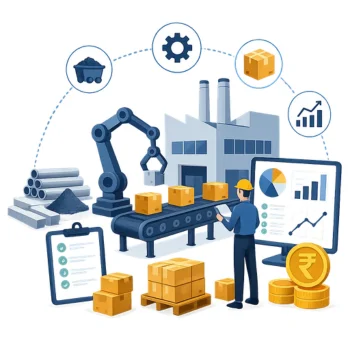
MANUFACTURING FINANCIAL CONTROL

Understand Costs, Stock, Cash, Dues, and Financial Position

Use connected accounting data to understand material purchases, operating expenses, inventory, receivables, payables, cash movement, profitability, and overall financial position.

FINANCIAL POSITION
01

Profit & Loss

See how sales, purchases, and operating expenses affect profitability.

02

Balance Sheet

Review cash, receivables, payables, inventory, assets, liabilities, and overall financial position.

03

Cash Flow

Understand money moving through customer collections, supplier payments, purchases, and operating expenses.

04

Trial Balance & Ledgers

Review account balances and transaction-level financial records.

MANUFACTURING CONTROL
05

Material & Purchase Reports

Review purchasing activity, supplier balances, and material-related transactions.

06

Inventory Reports

Review material and finished-goods stock records and movement.

07

Receivables & Payables

Track customer dues, supplier obligations, pending collections, and payments.

08

Sales & Expense Reports

Compare sales and operating costs to understand business performance.

MANUFACTURING ACCOUNTING FAQ

Frequently Asked Questions

Common questions about manufacturing purchases, raw materials, inventory, production-related costs, GST, sales, receivables, payables, and financial reporting.

What is accounting software for manufacturers?

Accounting software for manufacturers helps organize purchases, raw materials, inventory, production-related expenses, finished goods, sales, GST, receivables, payables, and financial records in one connected system.

Can BusinessBook Plus track raw materials and finished goods?

Yes. BusinessBook Plus helps maintain organized inventory records for materials and finished products so stock activity can stay connected with purchases and sales.

Can manufacturers track supplier balances and customer dues?

Yes. Manufacturers can review payables to suppliers and receivables from customers alongside purchasing, invoicing, collections, and payments.

Does BusinessBook Plus support GST-ready manufacturing billing?

BusinessBook Plus supports GST-ready invoicing and helps keep sales, purchases, expenses, and tax-related transaction records organized.

Which reports are useful for manufacturing businesses?

Manufacturers can use Profit & Loss, Balance Sheet, Cash Flow, Trial Balance, ledgers, receivables, payables, sales, purchase, expense, and inventory reports to review business performance.

Is BusinessBook Plus suitable for small and growing manufacturers?

Yes. It is suitable for manufacturers that want connected accounting, inventory, billing, GST, payment, and reporting workflows without relying on disconnected records.

READY TO GET STARTED?

Bring Manufacturing and Financial Control Together

Connect material purchases, inventory, production-related costs, finished goods, sales, GST, receivables, payables, cash flow, and financial reporting in one system.